Horny Shemale Tubes Updated Hot! -
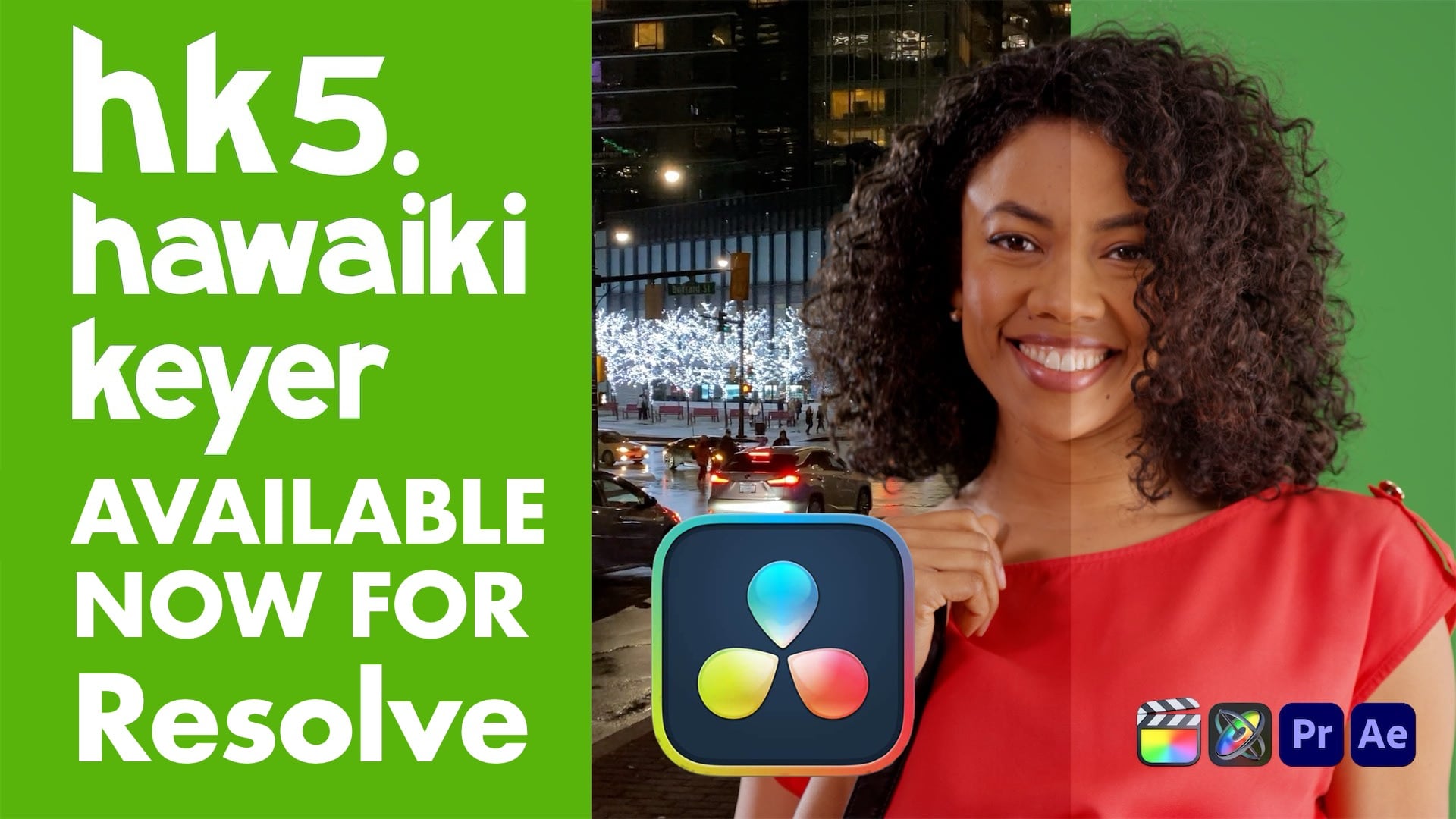
Available now for Resolve 20

Hawaiki Keyer 5 - the industry’s most sophisticated Green & Blue Screen Keyer now with AI tracking
Hawaiki Keyer 5 builds on the best-in-class keying tools of Hawaiki Keyer 4 and enables you to use them more efficiently with even more powerful and intelligent tools for isolating your foreground.
It's easier than ever to maintain hair and other fine detail by creating secondary keys and dynamic garbage mattes with the new AI-powered face & object tracking and the new realtime edge tracking. And the new Crop tools allow you to exclude the edges of the screen and speed up the rendering of complex keys.
Refining your composite is faster and simpler with all the edge tools that were in a separate plug-in now integrated into Hawaiki Keyer. And we've expanded the compositing toolset with even more edge operations and the ability to resize and composite the background within the plug-in.
On top of this we've refined the UI and operation of the plug-in and optimized it for Apple silicon and HDR.
"For my money, these new features along with the depth of the adjustments available make Hawaiki Keyer 5 the best green/blue-screen keyer plug-in on the market." Oliver Peters - digitalfilms

New in Hawaiki Keyer 5
. While significant legal milestones have been achieved globally, such as the recognition of a "third gender" in India, the community continues to face systemic barriers and a shifting legislative landscape in 2026. Historical and Cultural Context Ancient Roots
Contemporary LGBTQ culture has undergone a linguistic explosion thanks to trans thinkers. Terms like cisgender (non-trans), non-binary , genderqueer , and agender have moved from academic journals to Instagram bios. The widespread adoption of pronouns (he/him, she/her, they/them) in email signatures and name tags is a direct victory of trans advocacy. This shift has made queer spaces more inclusive not just of trans people, but of anyone who feels constrained by rigid gender roles.
Pioneered by Black and Latine trans women and queer youth in Harlem during the late 20th century, ballroom culture created "houses" that served as alternative families. This culture gave birth to voguing, runway categories, and linguistic terms like "spilling tea," "throwing shade," and "work."
From trailblazers like Laverne Cox and Janet Mock to newer voices like Indya Moore and Asia Kate Dillon, the world is finally getting to know and love the multifaceted individuals that make up the transgender community. These role models are breaking down barriers, challenging stereotypes, and paving the way for future generations to live authentically.
Originating in Harlem during the late 20th century, the Ballroom scene was created by Black and Latino trans and queer individuals as a safe haven from racism and transphobia. It introduced competitive categories blending runway modeling, dance, and performance.
The transgender community is teaching the broader culture a radical lesson: They are meant to liberate, not confine.
Transgender is an "umbrella term" encompassing diverse identities whose gender expression or identity differs from cultural expectations based on the sex they were assigned at birth.
How does it work?
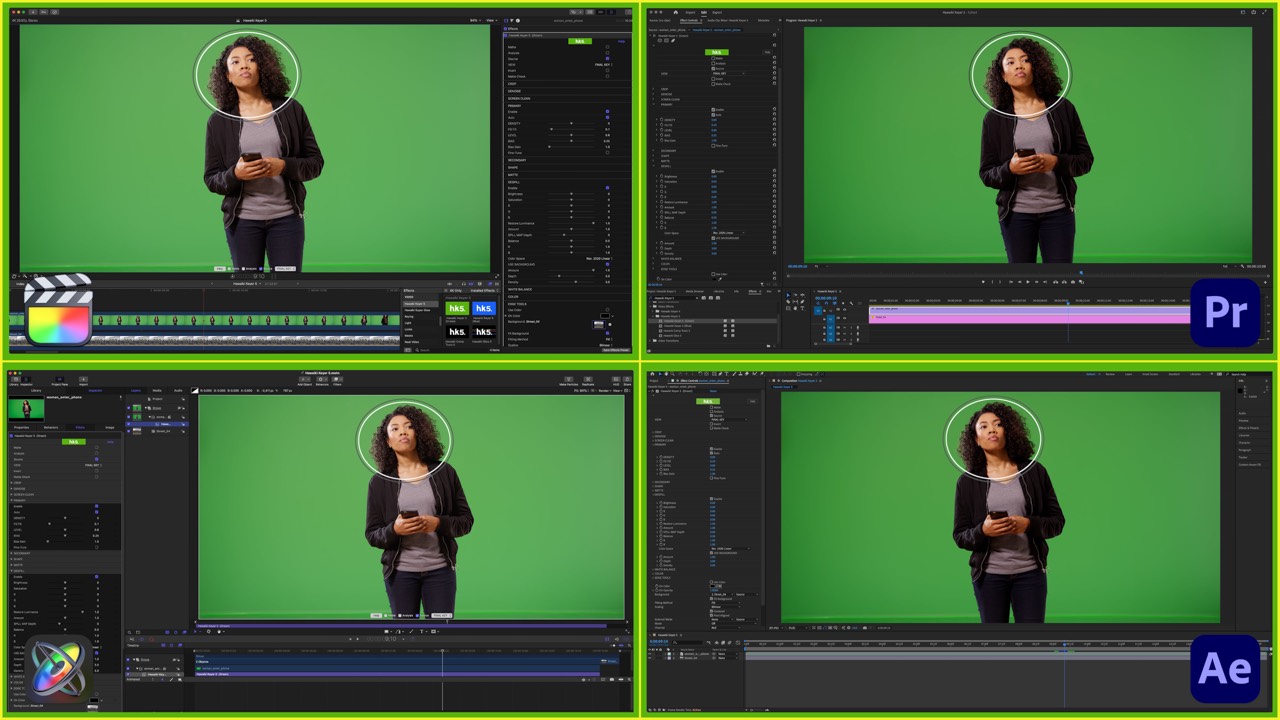
- Hawaiki Keyer 5 can be found in the Resolve Effects Library, Final Cut Pro Effects Browser, the Effects and Preset panel and Effect menu in After Effects, in Premiere Pro within the Effects panel / Video Effects and in the Motion Library tab under Filters. Simply drag it onto your clip to get started.
- The plug-in comes complete with two separate Keying modules, Hawaiki Keyer 5 (Green) and Hawaiki Keyer 5 (Blue). Select whichever is appropriate for your background color: so for green screens select Hawaiki Keyer Green and for blue screens choose Hawaiki Keyer Blue. The operation of both versions is identical but each has been optimised for its respective screen color. For this reason not all the controls work precisely the same between the two modules.
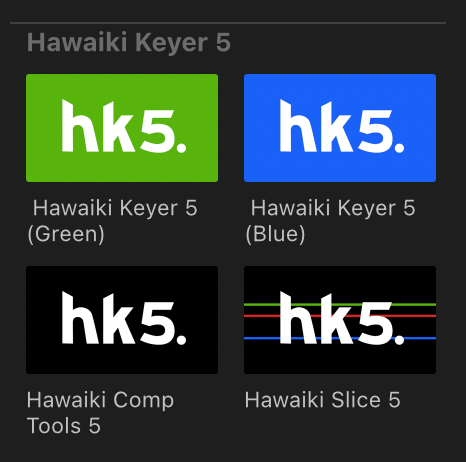
- Hawaiki Comp Tools and Hawaiki Slice can be used with either green or blue screens.
- Check out the Manual for more details.
Upgrading to Hawaiki Keyer 5
- Hawaiki Keyer 5 is a new product so doesn't overwrite your existing Hawaiki Keyer plug-ins.
- You can install Hawaiki Keyer 5 while continuing to use any older versions.
- Current users of Hawaiki Keyer are eligible for a 50% discount on the full price.
- for more information.
System Requirements
macOS: macOS 14.7 Sonoma +, macOS 15 Sequoia +, macOS 26 Tahoe
FxFactory: 8.0.27 +
Apps: DaVincei Resolve 20 +, Final Cut Pro 10.6 +, Motion 5.6 +, Premiere Pro 22 +, After Effects 22 +
Overview
Horny Shemale Tubes Updated Hot! -
. While significant legal milestones have been achieved globally, such as the recognition of a "third gender" in India, the community continues to face systemic barriers and a shifting legislative landscape in 2026. Historical and Cultural Context Ancient Roots
Contemporary LGBTQ culture has undergone a linguistic explosion thanks to trans thinkers. Terms like cisgender (non-trans), non-binary , genderqueer , and agender have moved from academic journals to Instagram bios. The widespread adoption of pronouns (he/him, she/her, they/them) in email signatures and name tags is a direct victory of trans advocacy. This shift has made queer spaces more inclusive not just of trans people, but of anyone who feels constrained by rigid gender roles. horny shemale tubes updated
Pioneered by Black and Latine trans women and queer youth in Harlem during the late 20th century, ballroom culture created "houses" that served as alternative families. This culture gave birth to voguing, runway categories, and linguistic terms like "spilling tea," "throwing shade," and "work." Terms like cisgender (non-trans), non-binary , genderqueer ,
From trailblazers like Laverne Cox and Janet Mock to newer voices like Indya Moore and Asia Kate Dillon, the world is finally getting to know and love the multifaceted individuals that make up the transgender community. These role models are breaking down barriers, challenging stereotypes, and paving the way for future generations to live authentically. Pioneered by Black and Latine trans women and
Originating in Harlem during the late 20th century, the Ballroom scene was created by Black and Latino trans and queer individuals as a safe haven from racism and transphobia. It introduced competitive categories blending runway modeling, dance, and performance.
The transgender community is teaching the broader culture a radical lesson: They are meant to liberate, not confine.
Transgender is an "umbrella term" encompassing diverse identities whose gender expression or identity differs from cultural expectations based on the sex they were assigned at birth.
Installation
Hawaiki Keyer 5 is available through FxFactory.

Download FxFactory to install Hawaiki Keyer 5.