|
| ||
ELECTRONICS COURSE THE SCHMITT TRIGGER Page 49  INDEX
INDEX
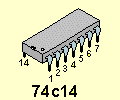
One of the most universal chips
is the Hex Schmitt Trigger, known
as the 74C14. It is also marketed as 40106, 40014, and 74HC14. These are CMOS chips and are characterised by low current consumption, high input
impedance and a supply voltage from 5v to 15v. (Do not substitute 7414 or
74LS14. They are TTL chips and operate on 4.5v to 5.5v and have low impedance
inputs.)
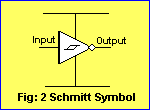
Fig: 2 shows the symbol for a single input Schmitt Trigger Inverter with power rails:
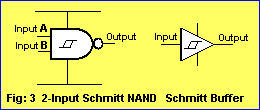
Fig 3 shows the Schmitt Trigger characteristic incorporated into other gates:
We will concentrate on the single-input Schmitt Trigger gate as
contained in the 74c14 IC.
The
output is HIGH until the input rises to 66% of rail voltage.
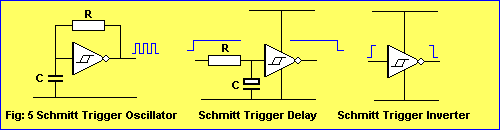
A Schmitt Trigger gate can be wired as an oscillator, delay, inverter (and
other functions, depending on the surrounding components).
Each of the 6 gates in the 74c14 can
be used to create a separate "building block" and this
gives the chip a wide range of capabilities. 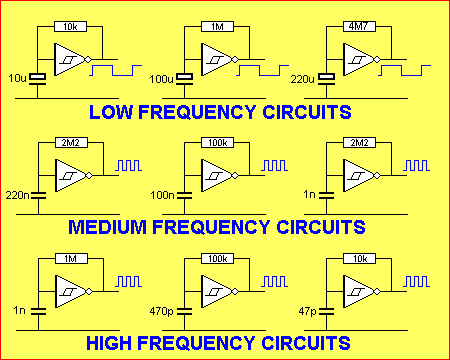 Fig: 6 Low, Medium and High frequency Schmitt Trigger Oscillators Indian Lisa Getting Fucked Hard On Stripchat Ti ((install)) -Despite a massive consumption market, adult entertainment remains highly stigmatized in traditional Indian society. Many creators adopt pseudonyms, use advanced geo-blocking tools to prevent their content from being viewed in their home regions, and employ strict privacy measures to protect their offline identities. : The perception of adult entertainment platforms varies widely across cultures and societies. In some places, there's a growing acceptance and normalization of such platforms as a form of adult entertainment. : Phrases that include specific locations, ethnicities, or platforms are highly sought after by marketers. They carry lower competition than generic search queries but possess a highly targeted user intent. indian lisa getting fucked hard on stripchat ti As Indian Lisa continues to ascend in her career, her future seems as bright and boundless as her ambition. With plans to expand her content and possibly venture into new areas of entertainment, there is much anticipation among her fans. Whether she chooses to remain a staple of Stripchat or diversify her presence across other platforms, one thing is certain: Indian Lisa will remain a significant figure in the world of online entertainment. For a model like Lisa, VR integration means she can cater to a global audience from her living room, offering private, immersive shows that feel intimate and exclusive. This is entertainment redefined—blurring the lines between digital and physical interaction. In some places, there's a growing acceptance and Ultimately, the story of "Indian Lisa getting hard on Stripchat" is a story about the evolution of entertainment. It reflects a global trend where adult content is no longer separate from mainstream lifestyle but is integrated into it. Indian creators are at the forefront of this movement, fusing traditional aesthetics with modern tech to build global brands. Understanding how independent performers leverage these platforms requires analyzing the broader digital lifestyle trends, financial landscapes, and entertainment shifts shaping the adult industry. The Architecture of High-Traffic Adult Search Intent As Indian Lisa continues to ascend in her Modern streaming and content platforms have allowed individuals from various backgrounds to reach international audiences. In recent years, there has been a noticeable increase in creators from South Asian backgrounds entering the digital performance space. These creators often cater to a growing market demand for diverse representation, using interactive tools to engage with their audience in real-time. The Business of Digital Performance Choosing a career in digital performance can be a complex decision for individuals from conservative cultural backgrounds. Many creators successfully navigate these challenges by adopting stage personas or utilizing specific production techniques to maintain a distinction between their professional digital presence and their private lives. The growing global reach of live-streaming platforms has allowed creators from diverse ethnic and cultural backgrounds to build dedicated international fanbases, challenging older industry paradigms. The Fusion of Lifestyle and Adult Media
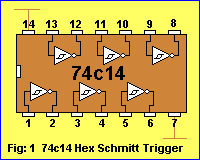
The voltage and current (called the "supply") for the 6 gates in a 74c14 comes from pin 14. The ground
pin for the chip is pin 7. Each gate on a circuit
diagram is normally shown without the power rails. It is understood they are present. 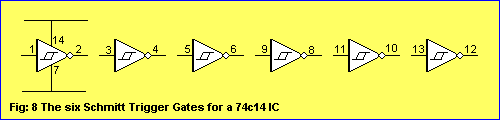
HOW A GATE WORKS 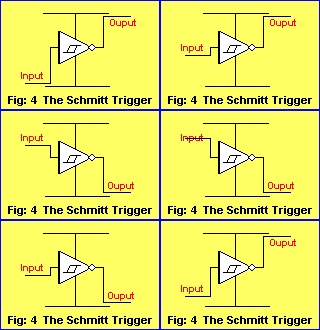
The output of a Schmitt Trigger gate is the opposite of the input. When the input is LOW,
the output is HIGH.
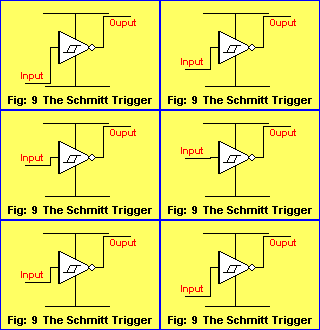
Fig: 9 shows a voltage being applied to the Schmitt gate. The voltage is 55% of rail and this is not sufficient to change the output:
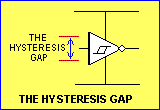
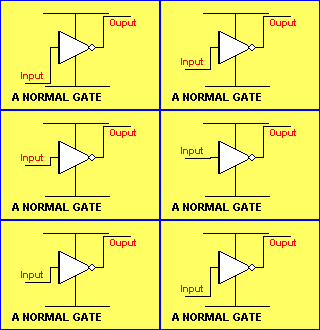
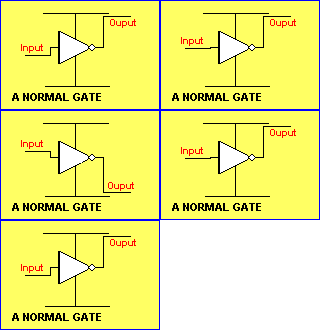
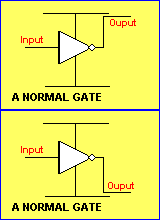
The following figure shows a normal gates. It changes when the input rises above about 53% of rail voltage and changes back when the input falls below 47%. The following diagram shows the very small gap for a normal chip, where the output jumps from HIGH-to-LOW in an uncontrolled manner: Here's the secret of a Schmitt gate: Any noise (up to 60%) entering a Schmitt Trigger will not alter the condition of the gate. Any noise up to 55% entering a normal gate will change the output:
There is one other problem with a normal gate. When the input is in the range of about 47%
to 53%,
the output goes high/low very rapidly. This is called the INTERMEDIATE ZONE
and the output does not know if it should be HIGH or LOW. 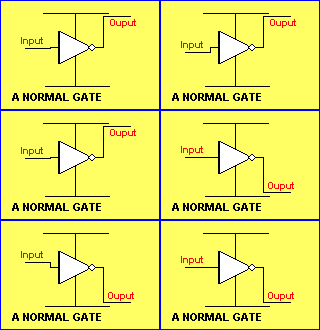 Even a fixed voltage in the intermediate zone will cause the output to fluctuate:
This is due to the
high gain of the amplifier in the gate and it does not know if the output
should be high or low. It is essential for the input voltage to pass
through this zone
very quickly to prevent the gate "oscillating." Fig: 12 shows how a Schmitt gate can be considered to be similar to a common-emitter NPN transistor: 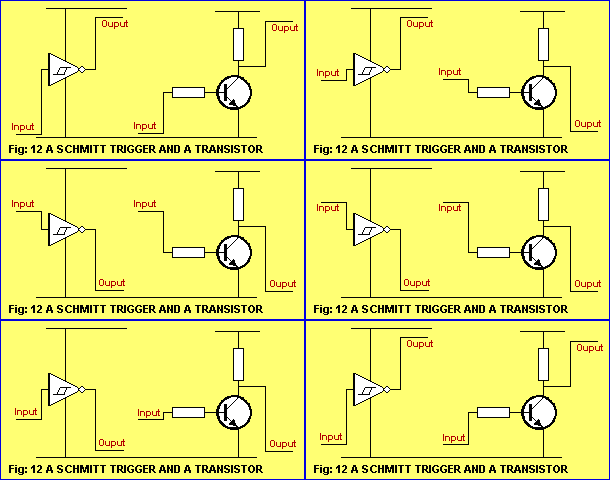
The similarity is only approximate and you can see the general operation of each circuit has some similarities. It is important to note that the two circuits cannot be interchanged without modifying the surrounding components. SWITCH
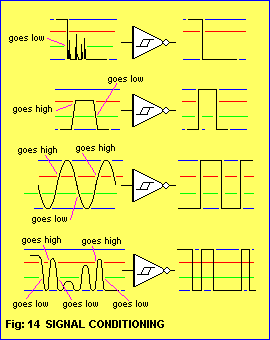
DEBOUNCE 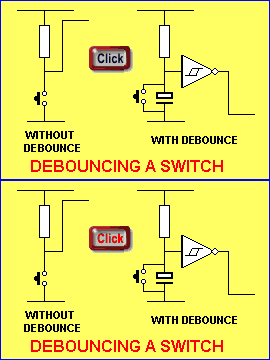 Mouseover to see switch action SIGNAL CONDITIONING
SWITCHING
THRESHOLD
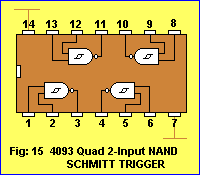
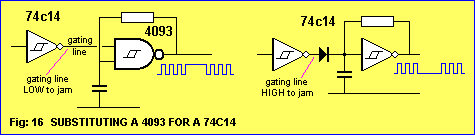
The CD 4093 is sometimes used for its gating capability. One of the inputs of
the gate can used to turn the gate on and off. This is called GATING.
This feature can be
achieved with a single-input
Schmitt Trigger with a diode.
This allows the 74c14 IC to be used.
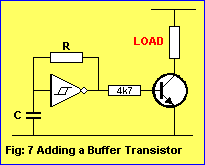
 The 555 replaced by a Schmitt gate and a transistor to provide the drive-current: 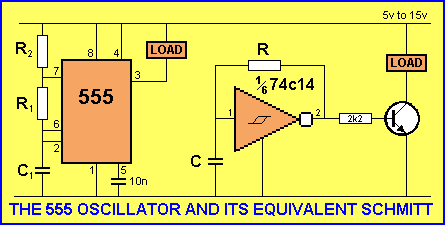
| ||