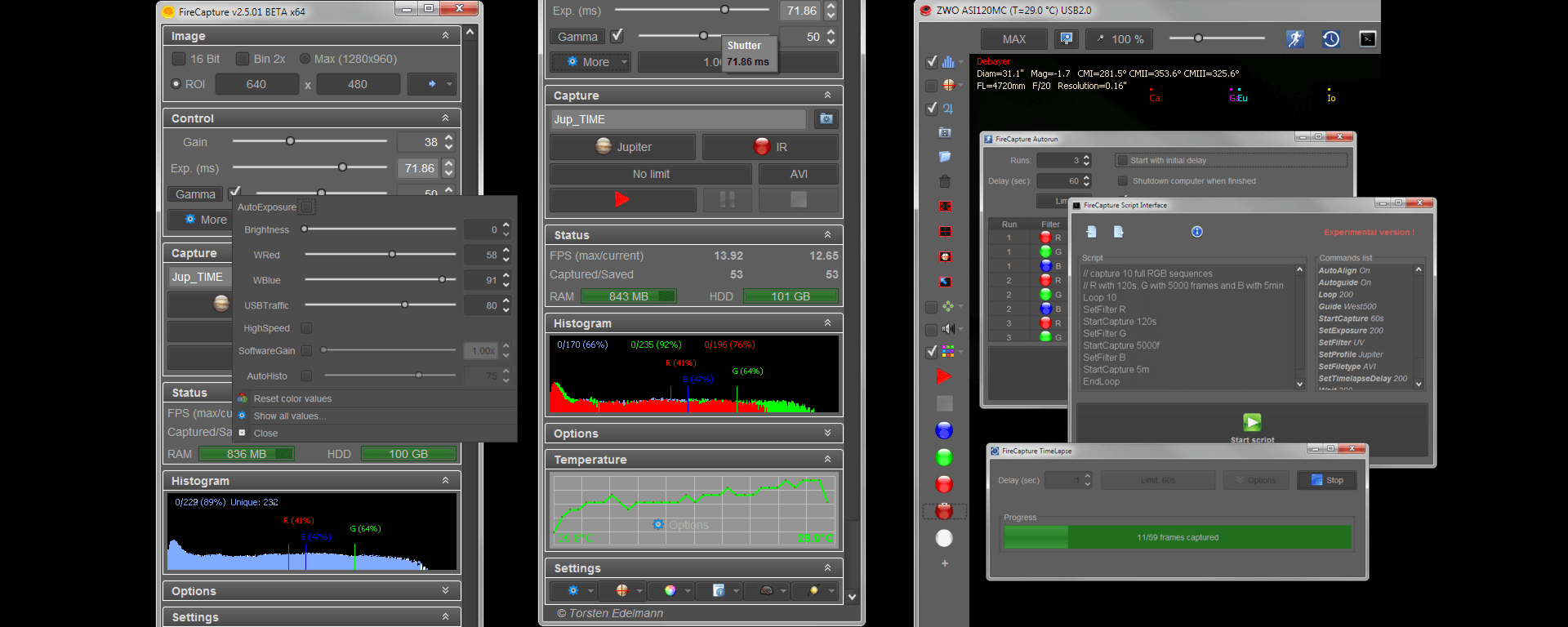
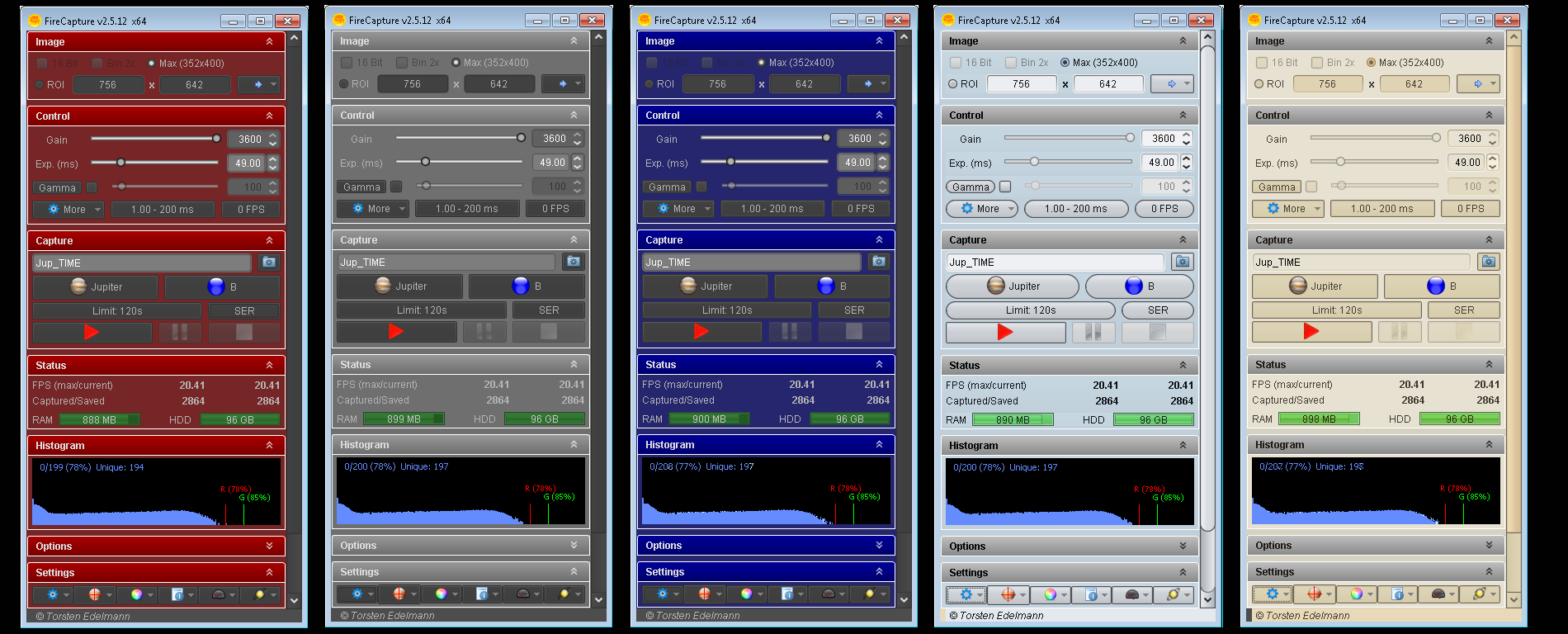
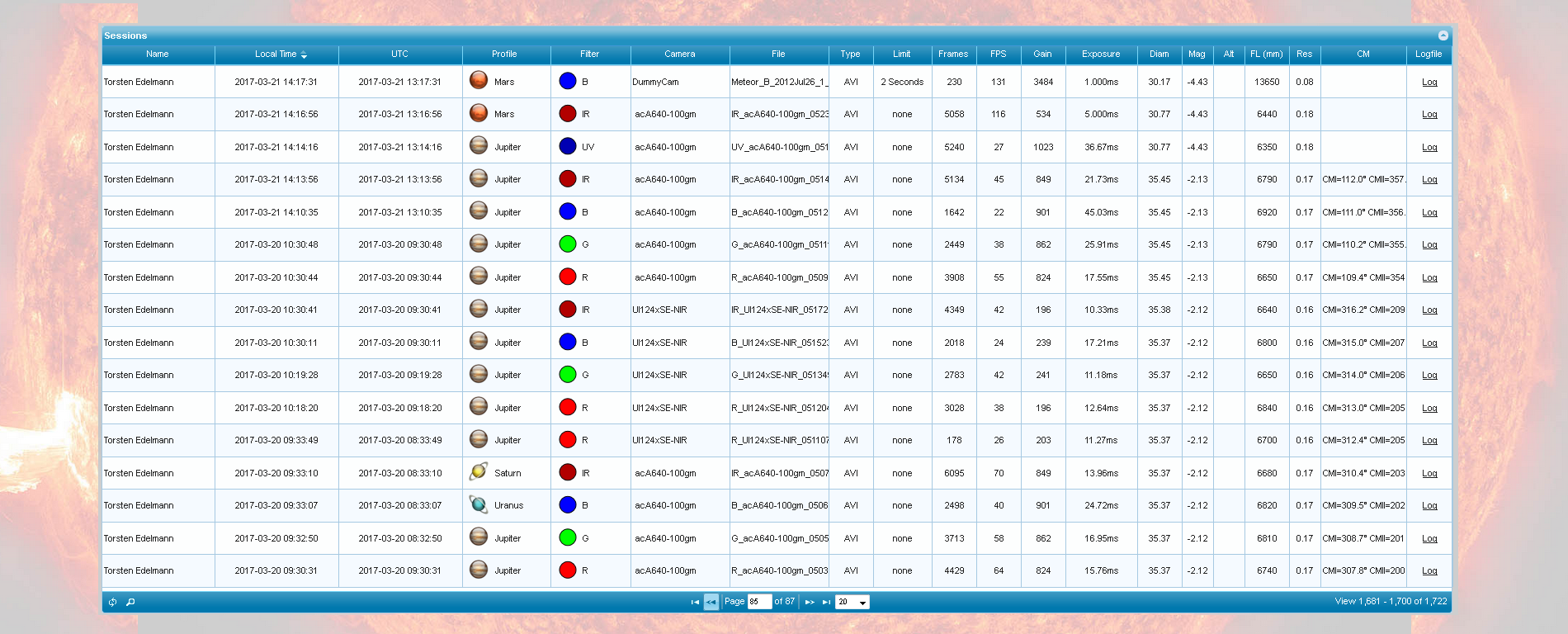
Raspberry support for FireCapture v2.6 and ZWO cameras !
| Compatibility |  FC v2.7.15 (x64) |
 FC v2.7.15 (x64) |
 FC v2.7.15 (x64) |
FC v2.7.15 (aarch64) |
|
|---|---|---|---|---|---|
 Altair Altair |
 |
 |
|
|
|
 ASCOM ASCOM |
 |
|
|||
 Basler Basler |
|
|
|||
 FLIR/FlyCap FLIR/FlyCap |
 |
|
|||
| FLIR/Spinnaker |
|
|
|||
 LUCID LUCID |
|
|
|||
 NexImage NexImage |
|
|
|||
 OGMA OGMA |
|
|
|
|
|
 PlayerOne PlayerOne |
|
|
|
|
|
 QHY QHY |
|
|
|
|
|
 Skyris Skyris |
|
|
|||
 SVBony SVBony |
|
|
|
|
|
 TIS
TIS |
|
|
|||
 Touptek/Omegon Touptek/Omegon |
|
|
|
|
|
 ZWO ASI ZWO ASI |
 |
|
|
|
|
Older Versions
Developing software is mostly fun, but it also takes up nearly all of my spare time. If you find FireCapture useful and would like to support me in continuing development you're welcome to donate a small amount of your choice.


Instead, I can offer you these helpful alternatives:
The release represents an incremental update focused on:
Run the executable inside a dedicated malware analysis environment (like Windows Sandbox, Any.Run, or an isolated Virtual Machine with no network connection).
Downloading and installing the Phoenix SID Extractor v1.3 Beta is a straightforward process. Here's a step-by-step guide:
If a graphical interface or deeper diagnostic capability is required, Microsoft’s official provides a tool called PsGetSid . PsGetSid allows users to translate SIDs to user names and vice versa across local or remote systems safely. Because it is maintained and digitally signed by Microsoft, it eliminates the malware risks associated with third-party beta tools. Best Practices for Handling Unknown Technical Utilities
Pass the executable through multi-engine scanners like VirusTotal to identify potential code injections.
The Phoenix SID Extractor isolates specific metadata headers within compiled binaries. In Windows deployment and embedded systems management, extracting SIDs manually from raw data structures is time-consuming and prone to errors. Structural Verification
When searching for a "full download" of utility tools, exercising caution is essential. Beta releases found on third-party sites or community forums can carry risks. To maintain system security: Use an Isolated Environment:
Phoenix SID Extractor V1.3 Beta: Complete Guide and Technical Overview
In most corporate and home environments, you do not need to risk downloading third-party executable files to extract SIDs. Windows provides powerful, built-in command-line tools and native administrative utilities that achieve the exact same results safely. Method 1: Using Windows PowerShell (Recommended)
: Steer clear of sites that require custom download managers, ask for survey completions, or hide the download button behind deceptive ads. 2. File Verification
The term points toward a specific, third-party utility designed to automate the discovery and extraction of these identifiers. Core Expected Functions
In the realm of digital forensic investigation, firmware analysis, and specialized data recovery, extracting System Identification (SID) data or specific firmware components can be a highly technical challenge. The has surfaced in tech forums as a utility designed to interface with specific hardware dumps or encrypted structures to pull valuable identification data.
Network administrators and security professionals extract SIDs for several legitimate reasons:
Instead, I can offer you these helpful alternatives:
The release represents an incremental update focused on:
Run the executable inside a dedicated malware analysis environment (like Windows Sandbox, Any.Run, or an isolated Virtual Machine with no network connection).
Downloading and installing the Phoenix SID Extractor v1.3 Beta is a straightforward process. Here's a step-by-step guide: phoenix sid extractor v1 3 beta download full
If a graphical interface or deeper diagnostic capability is required, Microsoft’s official provides a tool called PsGetSid . PsGetSid allows users to translate SIDs to user names and vice versa across local or remote systems safely. Because it is maintained and digitally signed by Microsoft, it eliminates the malware risks associated with third-party beta tools. Best Practices for Handling Unknown Technical Utilities
Pass the executable through multi-engine scanners like VirusTotal to identify potential code injections.
The Phoenix SID Extractor isolates specific metadata headers within compiled binaries. In Windows deployment and embedded systems management, extracting SIDs manually from raw data structures is time-consuming and prone to errors. Structural Verification Instead, I can offer you these helpful alternatives:
When searching for a "full download" of utility tools, exercising caution is essential. Beta releases found on third-party sites or community forums can carry risks. To maintain system security: Use an Isolated Environment:
Phoenix SID Extractor V1.3 Beta: Complete Guide and Technical Overview
In most corporate and home environments, you do not need to risk downloading third-party executable files to extract SIDs. Windows provides powerful, built-in command-line tools and native administrative utilities that achieve the exact same results safely. Method 1: Using Windows PowerShell (Recommended) PsGetSid allows users to translate SIDs to user
: Steer clear of sites that require custom download managers, ask for survey completions, or hide the download button behind deceptive ads. 2. File Verification
The term points toward a specific, third-party utility designed to automate the discovery and extraction of these identifiers. Core Expected Functions
In the realm of digital forensic investigation, firmware analysis, and specialized data recovery, extracting System Identification (SID) data or specific firmware components can be a highly technical challenge. The has surfaced in tech forums as a utility designed to interface with specific hardware dumps or encrypted structures to pull valuable identification data.
Network administrators and security professionals extract SIDs for several legitimate reasons:
It was back in 2008 when I got hold of a SONY newsletter announcing a new CCD sensor (ICX618) which promised fantastic sensitivity. Still working with an old webcam those days I instantly had the idea of replacing the webcam sensor with the new SONY sensor. It took weeks and dozens of emails to get the confidential spec of the new sensor. When I saw the sensitivity values it was clear: I had to have this sensor! The Basler Scout scA640 was the first machine vision camera on the market using this sensor and when I bought it the nightmare began: the included software was useless for planetary imaging and running the camera with the VRecord webcam tool was a complete PITA. Bugged by the inability to store even the basic camera settings I decided developing my own capture software.
What started as a solely private project soon turned into higher gear when fellow astronomers saw the software and insisted on getting it. I decided to make it public, included new camera interfaces and after years of continuous development FireCapture has evolved to one of the leading planetary capture tools. Developing the thing is only one part of the story: with a supportive community of users behind me I always had the feeling of someone 'looking over my shoulder' during the countless hours of programming. I can't mention all but just want to say:
Thank you guys !