Literature

Sumiko Kiyooka Rar Updated -

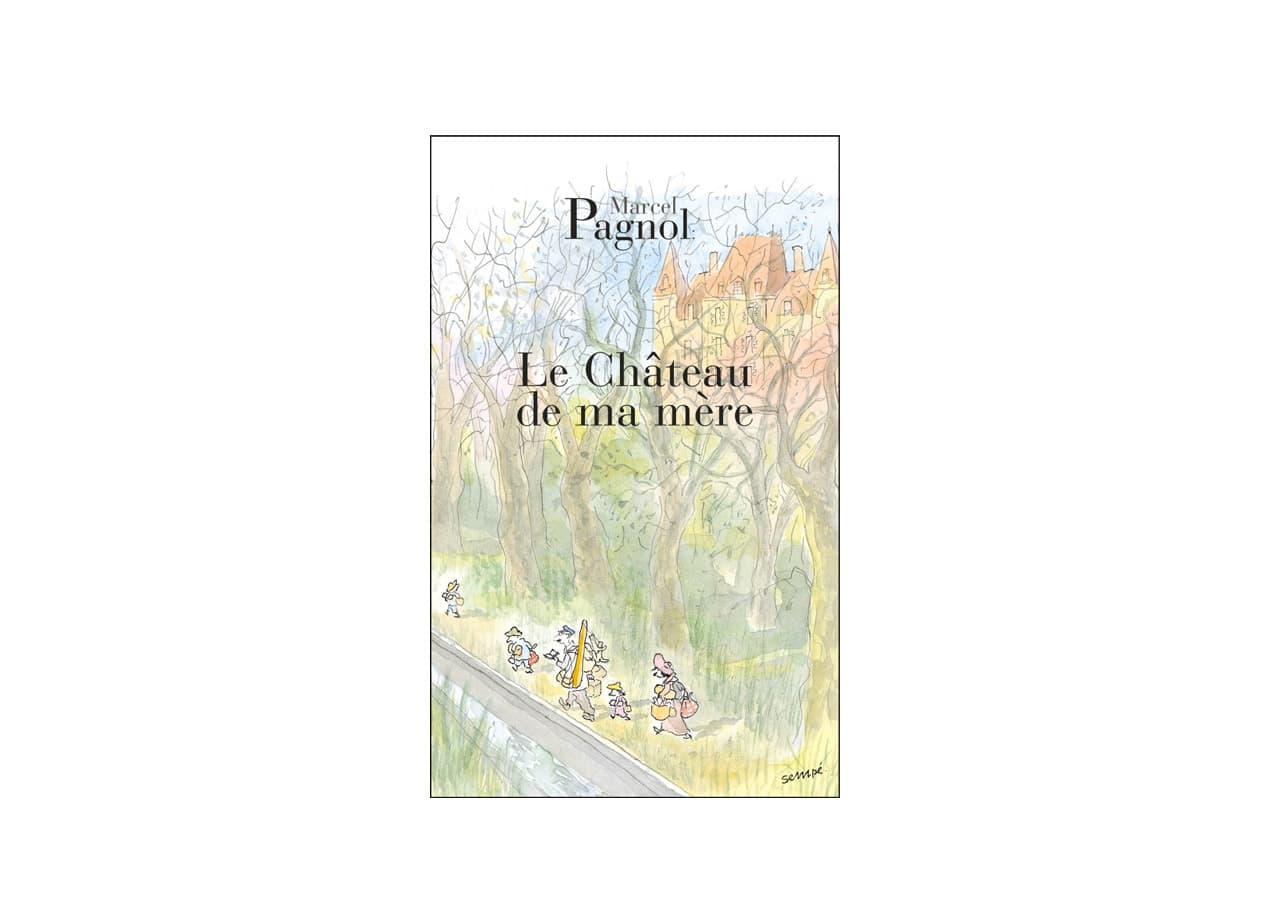
The most beautiful book on child friendship: one morning while hunting in the hills, Marcel meets the little peasant, Lili des Bellons. His vacations and his whole life will be illuminated by it.

The most beautiful book about childhood friendship.

Summary

One year after La Gloire de mon père (My Father’s Glory), Marcel Pagnol thought he would conclude his childhood memories with this Château de ma mère (1958), the second part of what he considered as a diptych, ending with the famous scene of the ferocious guardian frightening the timid Augustine. Little Marcel, after the family tenderness, discovered friendship with the wonderful Lili, undoubtedly the most endearing of his characters. The book closes with a melancholic epilogue, a poignant elegy to the time that has passed. In it, Pagnol strikes a chord of gravity to which he has rarely accustomed his readers.

Hey friend! “
I saw a boy about my age looking at me sternly. You shouldn’t touch other people’s traps,” he said. “A trap is sacred!
” 

– “I wasn’t going to take it,” I said. “I wanted to see the bird.” 

He approached: “it was a small peasant. He was, brown, with a fine Provencal face, black eyes and long girlish lashes.”

Buy online

You will also like:

Sumiko Kiyooka Rar Updated -

Whenever possible, support libraries or digital archives that digitize her work legally, as this ensures high-quality, long-term preservation. Conclusion: A Living Legacy

In targeting the production, sale, and distribution of sexualized imagery involving minors. Because several of Kiyooka's 1980s photo volumes depicted underage subjects in suggestive framing, her books were pulled from store shelves, banned from republication, and largely wiped from mainstream commercial markets.

Sumiko Kiyooka's work remains relevant today for several reasons. Firstly, her innovative approach to traditional Japanese art has inspired a new generation of artists to experiment with different styles and techniques. Secondly, her contributions to the world of art have helped to challenge the norms and conventions of Japanese art, paving the way for future generations of female artists. Finally, her work provides a unique glimpse into Japanese culture and history, making it an important part of the country's artistic heritage.

) that compile high-resolution scans of these vintage publications. Digital Collections: sumiko kiyooka rar updated

💡 Sumiko Kiyooka is frequently praised for her "classic" look, which has maintained a dedicated fanbase long after her active career ended.

Here is a breakdown of the common archive types and their approximate file sizes, based on real-world sources:

: Modern digital collections often compile her rarer works, such as Photograph Magazine 2010.23 , into accessible formats for research. Sumiko Kiyooka's work remains relevant today for several

: Between 1968 and 1973, Kiyooka published several radical collections of poetry, prose, and imagery focused explicitly on lesbian romance. Works like her 1970 book Natsuko and Sylvia and 1973's Kindan no majo ("The Forbidden Witch") sought to project a positive, pure-love depiction of female homosexuality away from heteronormative expectations.

For now, her record remains open—as it should be.

She began her career as a photojournalist after World War II, working for the Shin-Nippon Newspapers and Kineima Geppo-sha in Kyoto in 1948. She later moved to Tokyo in 1965 and established herself as a freelance photographer. For most of the 1950s and 1960s, her work was relatively conventional, but everything changed in 1977 with the publication of her first "Seishojo" series, Seishojo (Holy Girl) . This series of photographs featured young, often pre-adolescent girls, frequently in the nude. Finally, her work provides a unique glimpse into

Immediately exit any site that demands registration or software installations to download archived material. Legitimate Research Alternatives

The term "Sumiko Kiyooka RAR updated" is a testament to the growing interest in this remarkable Japanese artist. Sumiko Kiyooka's contributions to the world of art have been significant, and her work remains relevant today. The digitalization of art archives, such as the "Sumiko Kiyooka RAR updated" collection, has made it easier for art enthusiasts and researchers to access and study the work of this pioneering artist. As we continue to celebrate and appreciate the work of Sumiko Kiyooka, we are reminded of the importance of preserving and promoting our artistic heritage for future generations.

Sumiko Kiyooka was a multifaceted creative force born into Kyoto nobility in 1921. Over her seventy-year life, she transitioned through drastically different worlds:

Kiyooka's career spanned from war photography and photojournalism to highly stylized art photography. Between 1968 and 1973, she published a prolific series of books that blended photography with poetry and prose to document lesbian life in Japan. : Maiko of Gion
Whenever possible, support libraries or digital archives that digitize her work legally, as this ensures high-quality, long-term preservation. Conclusion: A Living Legacy

In targeting the production, sale, and distribution of sexualized imagery involving minors. Because several of Kiyooka's 1980s photo volumes depicted underage subjects in suggestive framing, her books were pulled from store shelves, banned from republication, and largely wiped from mainstream commercial markets.

Sumiko Kiyooka's work remains relevant today for several reasons. Firstly, her innovative approach to traditional Japanese art has inspired a new generation of artists to experiment with different styles and techniques. Secondly, her contributions to the world of art have helped to challenge the norms and conventions of Japanese art, paving the way for future generations of female artists. Finally, her work provides a unique glimpse into Japanese culture and history, making it an important part of the country's artistic heritage.

) that compile high-resolution scans of these vintage publications. Digital Collections:

💡 Sumiko Kiyooka is frequently praised for her "classic" look, which has maintained a dedicated fanbase long after her active career ended.

Here is a breakdown of the common archive types and their approximate file sizes, based on real-world sources:

: Modern digital collections often compile her rarer works, such as Photograph Magazine 2010.23 , into accessible formats for research.

: Between 1968 and 1973, Kiyooka published several radical collections of poetry, prose, and imagery focused explicitly on lesbian romance. Works like her 1970 book Natsuko and Sylvia and 1973's Kindan no majo ("The Forbidden Witch") sought to project a positive, pure-love depiction of female homosexuality away from heteronormative expectations.

For now, her record remains open—as it should be.

She began her career as a photojournalist after World War II, working for the Shin-Nippon Newspapers and Kineima Geppo-sha in Kyoto in 1948. She later moved to Tokyo in 1965 and established herself as a freelance photographer. For most of the 1950s and 1960s, her work was relatively conventional, but everything changed in 1977 with the publication of her first "Seishojo" series, Seishojo (Holy Girl) . This series of photographs featured young, often pre-adolescent girls, frequently in the nude.

Immediately exit any site that demands registration or software installations to download archived material. Legitimate Research Alternatives

The term "Sumiko Kiyooka RAR updated" is a testament to the growing interest in this remarkable Japanese artist. Sumiko Kiyooka's contributions to the world of art have been significant, and her work remains relevant today. The digitalization of art archives, such as the "Sumiko Kiyooka RAR updated" collection, has made it easier for art enthusiasts and researchers to access and study the work of this pioneering artist. As we continue to celebrate and appreciate the work of Sumiko Kiyooka, we are reminded of the importance of preserving and promoting our artistic heritage for future generations.

Sumiko Kiyooka was a multifaceted creative force born into Kyoto nobility in 1921. Over her seventy-year life, she transitioned through drastically different worlds:

Kiyooka's career spanned from war photography and photojournalism to highly stylized art photography. Between 1968 and 1973, she published a prolific series of books that blended photography with poetry and prose to document lesbian life in Japan. : Maiko of Gion