
For hardware and software requirements see this topic.
The underlying database schema still marks the system status as "Deploying" due to a timeout. Step-by-Step Resolution Guide 1. Verify Active Deployments
If you are facing this frustrating impasse, this guide outlines the and get your server maintenance back on track. What Causes the SUP0108 Error?
When this issue strikes, it completely blocks subsequent firmware installations, updates, or driver mounts, leaving IT environments vulnerable to missing vital system optimization and safety patches. Why the SUP0108 Error Occurs The underlying database schema still marks the system
: Dell has released permanent fixes for this issue in newer firmware versions (e.g., version 7.20.10.50 for iDRAC9), which better manage lockfiles and timeouts. Server Fault Underlying Causes Active Lifecycle Controller
If you manage software updates in Microsoft Configuration Manager (Current Branch), you have likely encountered the dreaded error. What Causes the SUP0108 Error
USE SUSDB EXEC spDeleteUpdate @localUpdateID = 0, @bIsLocPublished = 0
: Use the Dell RACADM tool or the iDRAC GUI (Maintenance > Job Queue) to delete any "Pending" or "Failed" tasks. it completely blocks subsequent firmware installations
If the UI shows no active tasks but you still get the error, you may need to clear the lock manually.
SELECT session_id, blocking_session_id, wait_type, command, text FROM sys.dm_exec_requests CROSS APPLY sys.dm_exec_sql_text(sql_handle) WHERE blocking_session_id > 0
Dell recommends using JID_CLEARALL as the first choice for clearing job queues. The JID_CLEARALL_FORCE command should be used only as a last resort to recover iDRAC Lifecycle Controller from a failed state, as it may trigger an iDRAC reboot.
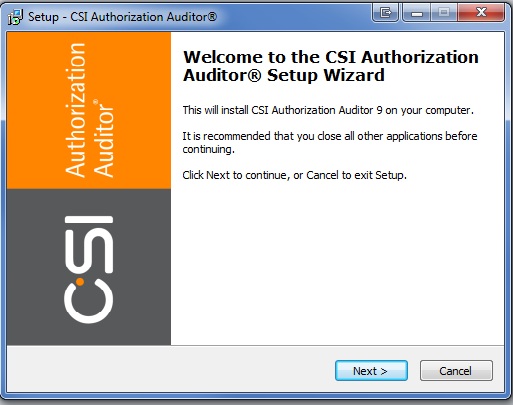
Click next on the welcome screen in order to continue.
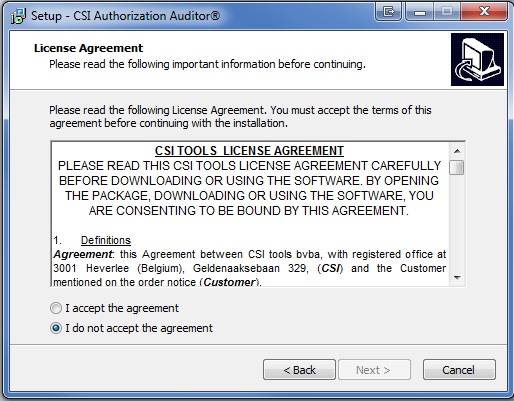
We advise you to read the license agreement before clicking 'I accept the agreement'. Click next to continue.
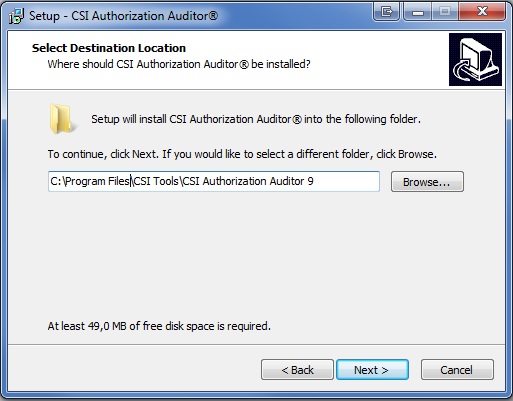
Choose a valid destination folder and click next. If the destination folder does not exist yet, a pop-up dialog asking you whether you want to create the directory will be displayed. Click next to continue.
Note: When installing the Access 2007 or 2010 version of the CSI Authorization Auditor, please make sure that the destination folder is a trusted location.
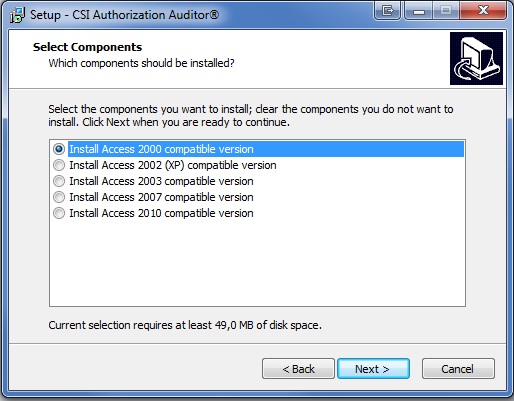
Select which Access-specific version of the CSI Authorization Auditor you wish to install.
Click next to continue.
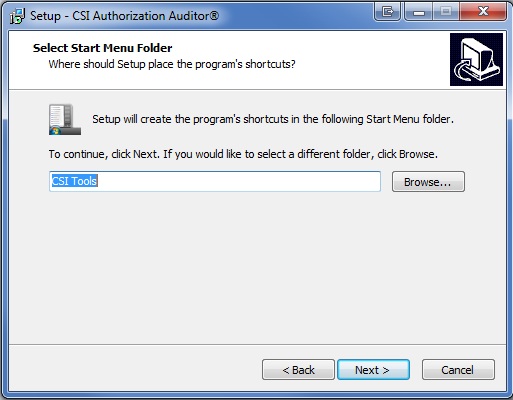
An entry in your start menu will be created. You can define the folder name which will be used.
We recommend that you leave this to the default 'CSI Tools' name. Click next to continue.
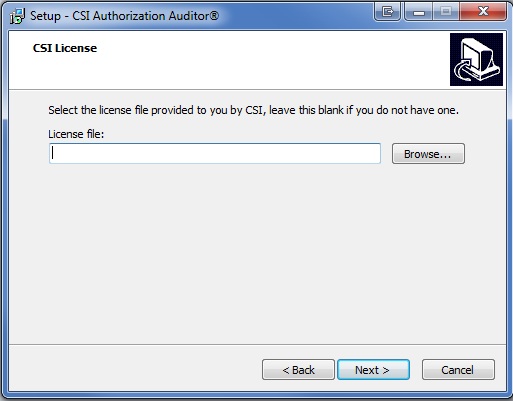
At this step you can browse for your license file which grants you access to your CSI Authorization Auditor. If you do not have this file at installation time, you can skip this step but keep in mind that you will need to link the license file at program startup before CSI Authorization Auditor will be functional.
Click next to continue.
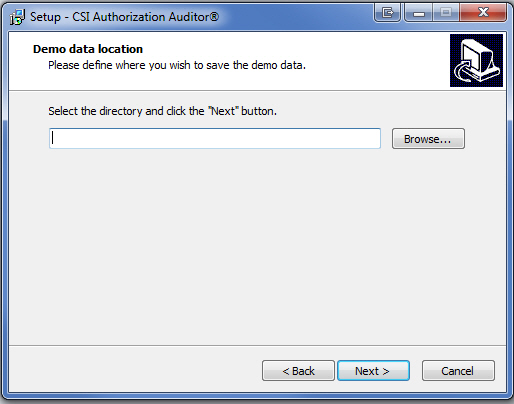
Please indicate the location where you wish to save the demo data which is provided when installing CSI Authorization Auditor.
We recommend to use a user-specific directory such as My Documents. A valid folder must be selected in order for the installation to proceed. Click next to continue.
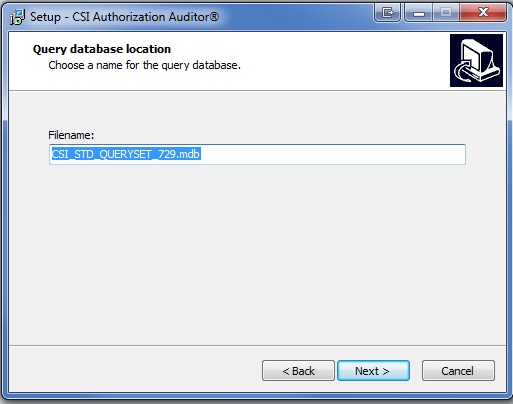
Please choose a name for the query database. Click next to continue.
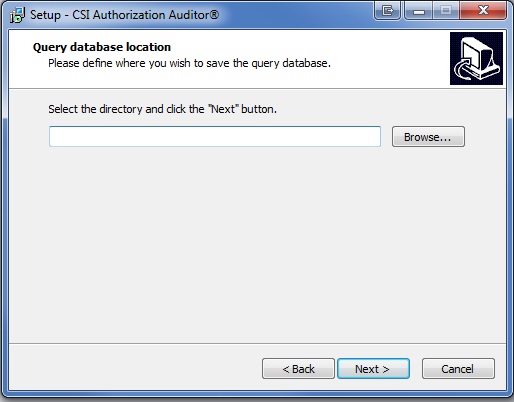
Please indicate the location where you wish to save your query database. We recommend to use a user-specific directory such as My Documents. A valid folder must be selected in order for the installation to proceed. Click next to continue.
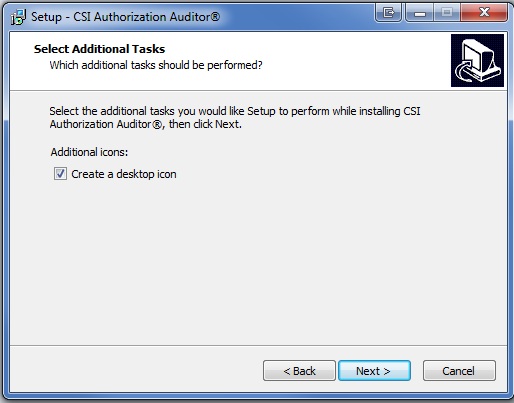
When desired the installation process can place a shortcut to the CSI Authorization Auditor on your desktop. Click next to continue.
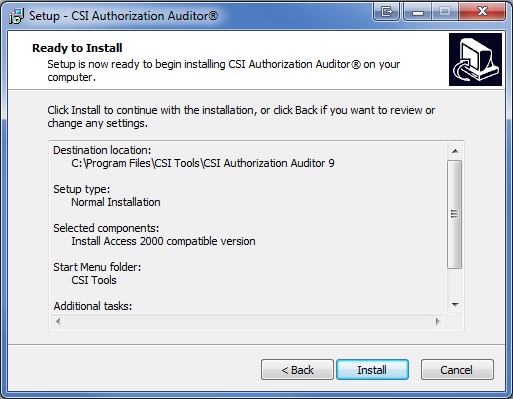
This part of the setup allows you to review the installation settings before the actual installation begins.
Click install to continue.
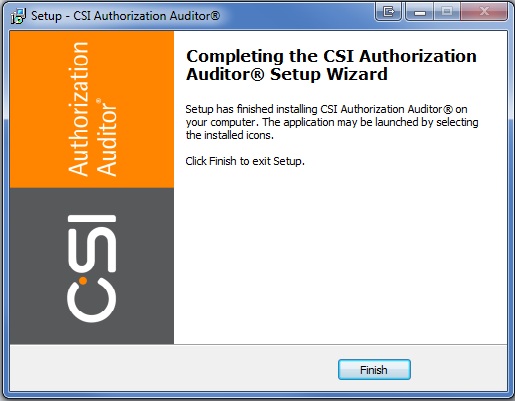
All files have now been copied and installed.
There are two ways to launch the CSI Authorization Auditor:
CSI tools BVBA © 2012 - All Rights Reserved